The Discovery to Current Understanding of Myasthenia Gravis:
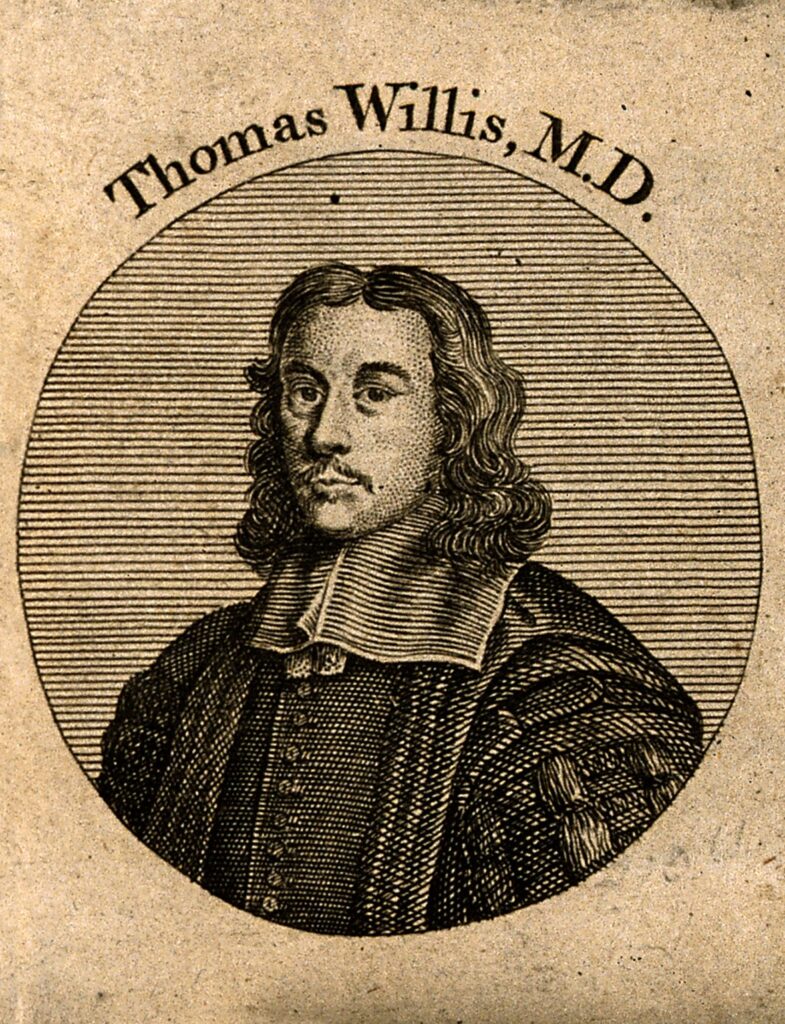
The disorder myasthenia gravis was first reported in Indian Chief Opechankanough who died in 1644. The account described him to have weakness and needing assistance holding up his eyelids (Marasteller, 1988). The first time the disease was written about was by the Oxford physician, Thomas Willis in his 1672 book, “Two Discourses Concerning the Soules of Brutes” (Crignon, 2017).
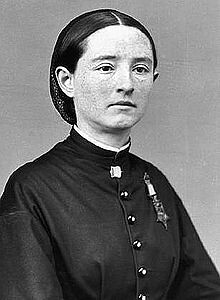
The first modern description came in France from Samuel Wilks in 1877 where he described a disorder that resulted in paralysis (Wilks, 1877). Throughout the 1800s multiple case studies arose describing the muscular paralysis that is now known as myasthenia gravis arose across Europe. The decreased muscle tone and paralysis that often led to respiratory distress were found in these cases. These cases of paralysis were also found to result in nerve loss but the structure of the medulla remained the same (Shaw, 1890). The rare condition continued to have more case studies arise of this paralysis and muscular weakness until it was first given the name myasthenia gravis pseudoparalytica by Friedrich Jolly in 1895. The origins of the name are greek and translate to severely weak muscles. The name describes the physiological representations of the case studies described as muscle paralysis and weakness in patients (Jolly, 1895). It was suggested in the early 1900s that the disease affect the lymphatic system of individuals when patients accumulated lymphocytes in their muscle tissue (Buzzard, 1906). Further investigation into this resulted in the discovery that the thymus was abnormal in many patients who have myasthenia gravis. In a study from 1917, over half of the patients with myasthenia gravis had a thymus tumor (Bell, 1917). This lead to the first modern treatment for myasthenia gravis which was performing partial thymectomy on patients (Haberer, 1918). Also in terms of treatment, a major breakthrough came when Dr. Mary Walker used Prostigmin, today known as neostigmine, to treat patients with myasthenia gravis. This treatment greatly reduced the paralysis symptoms and is still used as a muscle strengthener for patients today (Walker, 1935).
In 1973 it was first suggested that myasthenia gravis is autoimmune when rabbits developed paralysis after being injected with antigens for their acetylcholine receptors that were purified from Electrophorus electricus (Patrick, 1773). Then in 1975 through using mice, it was shown that injecting them with immunoglobulin serum of patients that have myasthenia gravis resulted in decreased acetylcholine receptors and decreased nerve responses. These experiments first suggested that there is a circulating factor from the serum that causes myasthenia gravis (Toyka, 1975). Then, in 1980 monoclonal antibodies helped determine the immunogenic regions of the alpha and beta subunits on the acetylcholine receptor (Tzartos, 1980). A paper published in 2001 identified the mutations that result in the development of myasthenia gravis were identified. Specifically, mutations in the ε-subunit of the acetylcholine receptor cause the deficiency of the receptors that result in the disorder (Nichols, 2001). Congenital inheritance of myasthenia gravis is rare. The majority of the patients that have myasthenia gravis have an autoimmune pathogenesis. Then in 2002, another mutation that resulted in myasthenia gravis was identified in the CTLA-4 gene. Dr. Wang and others at the Center for Molecular Medicine and the Department of Medicine in Stockholm, Sweden found that single nucleotide polymorphisms in the CTLA-4 gene can also cause myasthenia gravis (Wang, 2002). The main cause of the autoimmune myasthenia gravis occurs when the fab antibody binds to the alpha subunit of the acetylcholine receptor. This results in the degradation of receptors and myasthenia gravis (Noridomi, 2017).
Click here to learn how myasthenia gravis develops!
Sources Used:
Marsteller, H. B. (1988). The first American case of myasthenia gravis. Archives of neurology, 45(2), 185-187. https://jamanetwork.com/journals/jamaneurology/fullarticle/587278
Crignon, C. (2017). How Animals may help understand men. Thomas Willis’s Anatomy of the Brain (1664) & Two Discourses Concerning the Soules of Brutes (1672). https://quod.lib.umich.edu/e/eebo/A66518.0001.001?rgn=main;view=fulltext
Wilks, S. (1877). On Cerebritis, Hysteria, and Bulbar Paralysis, as Illustrative of Arrest of Function of the Cerebrospinal Centres. Guy’s Hosp, 22, 7-55. https://books.google.com/books?hl=en&lr=&id=siOQbiF8fikC&oi=fnd&pg=PR1&dq=related:FConfyeyRmMJ:scholar.google.com/&ots=ibbK-uom0L&sig=WG6Odd7Uuvs9Wp_nVOV0hZXVaCA#v=onepage&q&f=false
Shaw, L. E. (1890). A Case of Bulbar Paralysis Without Structural Changes in the Medulla, Brain 13, 96-99.https://books.google.com/books?id=jbNjDwAAQBAJ&pg=PT220&lpg=PT220&dq=Shaw,+L.+E.:+A+Case+of+Bulbar+Paralysis+Without+Structural+Changes+in+the+Medulla+,+Brain+13:96-99,+1890&source=bl&ots=BAu32AYWcq&sig=ACfU3U2c2sE7N9mEEOZlZJA0XNsbPWmevg&hl=en&sa=X&ved=2ahUKEwiAod_Crun9AhWnEVkFHRxFBSwQ6AF6BAgGEAM#v=onepage&q=Shaw%2C%20L.%20E.%3A%20A%20Case%20of%20Bulbar%20Paralysis%20Without%20Structural%20Changes%20in%20the%20Medulla%20%2C%20Brain%2013%3A96-99%2C%201890&f=false
Jolly, F. (1895). Ueber myasthenia gravis pseudoparalytica. Berl Klin Wschr, 32, 1-7. https://www.acpjournals.org/action/showTocPdf?issue=6&volume=52&journalCode=aim&area=production
Nichols, P., Croxen, R., Vincent, A., Rutter, R., Hutchinson, M., Newsom‐Davis, J., & Beeson, D. (1999). Mutation of the acetylcholine receptor ε‐subunit promoter in congenital myasthenic syndrome. Annals of Neurology: Official Journal of the American Neurological Association and the Child Neurology Society, 45(4), 439-443.https://onlinelibrary.wiley.com/doi/pdf/10.1002/1531-8249%28199904%2945%3A4%3C439%3A%3AAID-ANA4%3E3.0.CO%3B2-W
Wang, X. B., Kakoulidou, M., Qiu, Q., Giscombe, R., Huang, D., Pirskanen, R., & Lefvert, A. K. (2002). CDS1 and promoter single nucleotide polymorphisms of the CTLA-4 gene in human myasthenia gravis. Genes & Immunity, 3(1), 46-49. https://www.nature.com/articles/6363816
Patrick, J., & Lindstrom, J. (1973). Autoimmune response to acetylcholine receptor. Science, 180(4088), 871-872.https://www.science.org/doi/10.1126/science.180.4088.871?url_ver=Z39.88-2003&rfr_id=ori:rid:crossref.org&rfr_dat=cr_pub%20%200pubmed
Toyka, K. V., Brachman, D. B., Pestronk, A., & Kao, I. (1975). Myasthenia gravis: passive transfer from man to mouse. Science, 190(4212), 397-399. https://www.science.org/doi/10.1126/science.1179220
Tzartos, S. J., & Lindstrom, J. M. (1980). Monoclonal antibodies used to probe acetylcholine receptor structure: localization of the main immunogenic region and detection of similarities between subunits. Proceedings of the National Academy of Sciences, 77(2), 755-759. https://www.pnas.org/doi/abs/10.1073/pnas.77.2.755
Noridomi, K., Watanabe, G., Hansen, M. N., Han, G. W., & Chen, L. (2017). Structural insights into the molecular mechanisms of myasthenia gravis and their therapeutic implications. Elife, 6, e23043.https://elifesciences.org/articles/23043
BUZZARD, E. F. (1906). The clinical history and post-mortem examination of five cases of myasthenia gravis. Brain, 28(3-4), 438-483. https://ia600708.us.archive.org/view_archive.php?archive=/22/items/crossref-pre-1909-scholarly-works/10.1093%252Fbrain%252F18.2-3.457.zip&file=10.1093%252Fbrain%252F28.3-4.438.pdf
Bell, E. T. (1917). Tumors of the thymus in myasthenia gravis. The Journal of Nervous and Mental Disease, 45(2), 130-143.
https://journals.lww.com/jonmd/Citation/1917/02000/TUMORS_OF_THE_THYMUS_IN_MYASTHENIA_GRAVIS.2.aspx
Walker, M. B. (1935). Case showing the effect of Prostigmin on myasthenia gravis. https://journals.sagepub.com/doi/10.1177/003591573502800633

Since the discovery of Myasthenia Gravis is there a time period where there was an increase in cases?
Hello, yes there is! In the last few decades, there has been a significant rise in the reported cases of myasthenia gravis. Many researchers suggest that the reason for this is the increased diagnostic technology. With the accuracy of MRI scans and the advanced testing that can be done with bloodwork, it is much easier to diagnose myasthenia gravis than it was in the past. This is leading to more diagnosis and therefore an increase in cases even though researchers suggest the actual number of people who have the disorder are staying the same, physicians are just getting better at identifying patients. Despite the improvement diagnosis is still a challenge due to myasthenia gravis having similar symptoms to other disorders that affect the nervous system like ALS, and Lambert-Eaton syndrome.