Myasthenia Gravis is classified as an autoimmune disorder which has made treating the disorder difficult. The findings below describe treatments that have been used in the past and present to help treat those with myasthenia gravis through the years:
Thymectomies As A Start
A characteristic of many individuals who have myasthenia gravis is thymomas or tumors on their thymus. The thymus produces T cells which help our body’s immune response (Bell, 1917). When this development is misregulated and tumors develop, the autoantibodies that result in myasthenia gravis attack the acetylcholine receptors. The first major treatment attempt for the disorder involved partial removal of the thymus, a thymectomy. Dr. Habere performed these procedures in 1918 as an attempt to alleviate the weakness and paralysis that resulted from patients with myasthenia gravis. The initial procedures were successful in that patients undergoing the partial thymectomy received some alleviation of their symptoms. The published finding highlights one case of a 27-year-old man who received a thymectomy to help treat his myasthenia gravis. There was reported great improvement in his symptoms. However, despite the successes of the removal, the procedure was still very risky. Individuals with myasthenia gravis had an increased risk of being under anesthesia. Myasthenia gravis can affect the diaphragm which prevents patients from breathing regularly. This posed a challenge when putting the patient under anesthesia and having to manage their airway (Haberer, 1918). Therefore individuals continued searching for a less risky option to treat patients.
Accidental Discovery of Ephedrine
Through searching for a less risky solution for treating patients with myasthenia gravis, researchers investigated different drugs to help treat those with the disorder. One of the first drugs tried was ephedrine. The discovery came through a patient in 1929 by the name of Harriet Edgeworth. Harriet had myasthenia gravis and while being treated, she was provided ephedrine to help with her menstrual cramps. After taking the drug improvement in muscular weakness was noted. Specifically, she noticed improvements in chewing, swallowing, and respiratory weakness. To see if the relationship was due to ephedrine it was removed from her daily intake. When removed the weakness returned. The drug ephedrine acts as a stimulant for the central nervous system which was explained to alleviate some of the symptoms. Despite the success of Harriet, the drug was used very little in the treatment of myasthenia gravis (Edgeworth, 1930).
A Breakthrough with Prostigmin
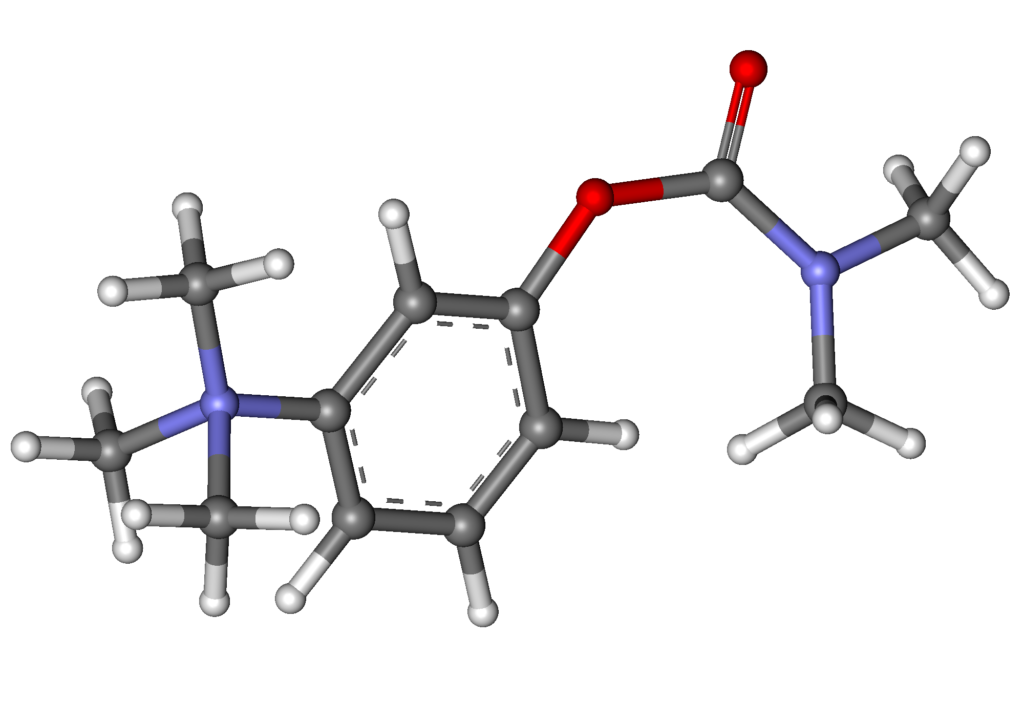
A major treatment breakthrough was found when Prostigmin was utilized to treat individuals with myasthenia gravis. Dr. Mary Walker would inject patients with Prostigmin who had myasthenia gravis in 1935. This injection greatly reduced the paralytic symptoms of patients with myasthenia gravis (Walker, 1935). Prostigmin works as a muscle strengthener and prevents nondepolarizing blockages. The drug works by slowing the breakdown of acetylcholine by competitively binding to acetylcholinesterase which is needed to bind to the receptors to allow for muscular contraction. This allows for more acetylcholine to remain in the neuromuscular junction. The receptors that were not broken down in the immune response for myasthenia gravis no have more acetylcholine to transmit more signal making up for the deficit caused by the degraded receptors. (Yerram, 2022). The drug Prostigmin also goes by the name neostigmine. More research was done to optimize the treatment of myasthenia gravis by using neostigmine. This was based on the successes seen by Dr. Walker and other physicians who began prescribing neostigmine to treat patients with myasthenia gravis. The drug was found to be most effective at relieving a myasthenic crisis. It was also found to be beneficial to inject patients with neostigmine before any exercise or an increase in physical activity. The drug was also found to help alleviate the anesthesia risk that patients had when they were receiving a thymectomy (Turner, 1959). Neostigmine is still widely prescribed today to treat those with myasthenia gravis.
A Steroid Option
Another treatment that was popular for those with myasthenia gravis was the use of corticosteroids. This treatment however was toxic for patients when used long-term. As a result, patients were prescribed cyclosporine to help treat their myasthenia gravis symptoms. Cyclosporin was found useful in helping prevent the autoimmune response that attacks, then degrades the acetylcholine receptors that result in myasthenia gravis. The drug works by blocking T-cell-dependent function. This function is necessary for myasthenia gravis to develop in individuals. As a result, the patients were able to get the similar benefit that the corticosteroids provide but can use cyclosporine as a treatment for the long term without the toxic effects (Tindall, 1993).
Hope With NACHO
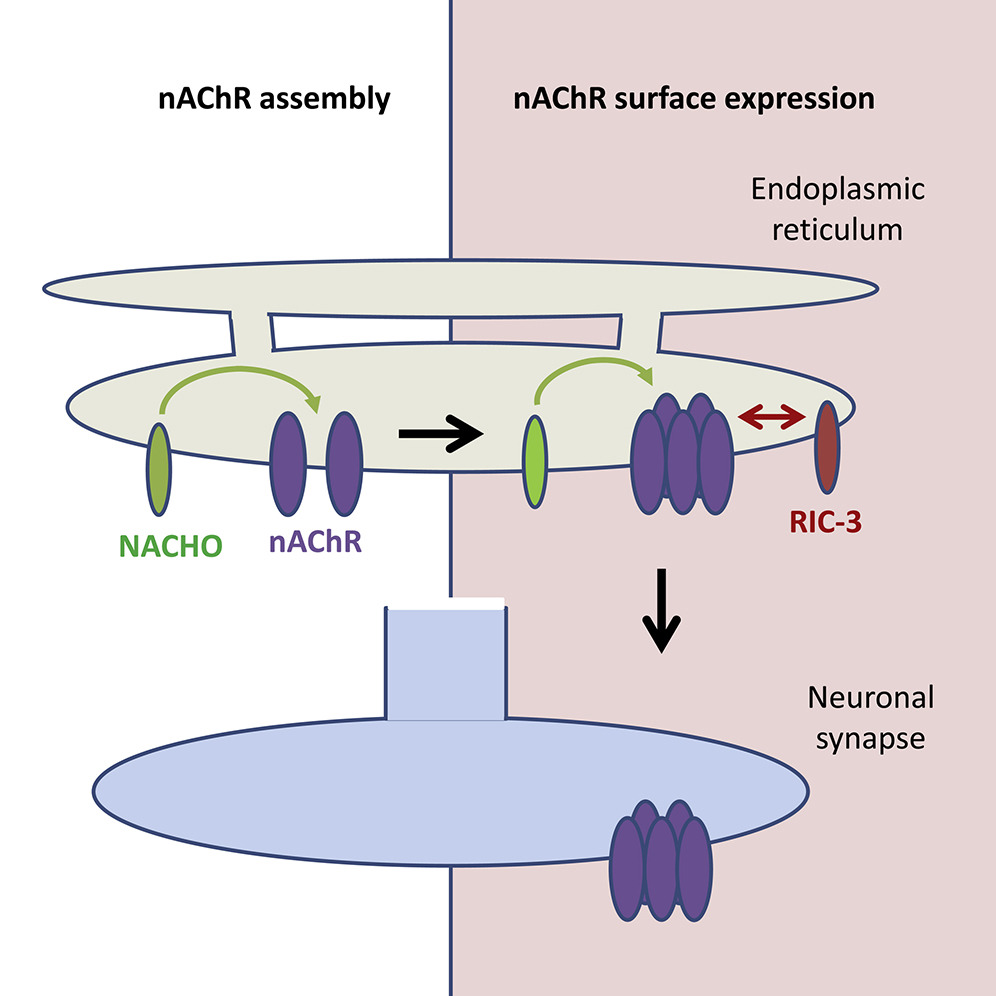
Work continued to be done to build off the success that was found when using neostigmine. Other cholinesterases were found to be effective but better therapies were needed since the increase of acetylcholine in the synapse provides temporary relief. Thymectomies and other treatments targeting the immune system can provide a cure. However, patients are left with a suppressed immune system for the rest of their life which makes them susceptible to other diseases. Therefore research into chaperone proteins was investigated to provide an alternate treatment target for acetylcholine degradation from myasthenia gravis. The chaperone protein NACHO. NACHO was found to help the assembly process of the subunits to form the acetylcholine receptors. This allowed for the development of therapeutics to target NACHO and help reduce the symptoms of those with myasthenia gravis without suppressing the immune system. NACHO therapeutics would allow for the increased assembly of acetylcholine receptors which would help replace the ones degraded from the autoimmune response in myasthenia gravis (Matta, 2021).
Current Treatment Strategy
Myasthenia gravis being an autoimmune disorder affects individuals in different ways with different onset posing a challenge for treatment. Treatment today still involves a trial and error process with surgeries, steroids, muscle strengtheners, and steroids (Johns Hopkins, 2023). Patients work with their physicians to find the combination that works best for them and hopefully a complete treatment is available with the emerging technology in the future.
The Sources Used
Bell, E. T. (1917). Tumors of the thymus in myasthenia gravis. The Journal of Nervous and Mental Disease, 45(2), 130-143.
https://journals.lww.com/jonmd/Citation/1917/02000/TUMORS_OF_THE_THYMUS_IN_MYASTHENIA_GRAVIS.2.aspx
Haberer, H. V., & Von Haberer, H. (1918). Zur klinischen Bedeutung der Thymusdrüse. Arch. klin. Chir, 109, 193-243.
Edgeworth, H. (1930). A report of progress on the use of ephedrine in a case of myasthenia gravis. Journal of the American Medical Association, 94(15), 1136-1136.
https://jamanetwork.com/journals/jama/article-abstract/235110
Walker, M. B. (1935). Case showing the effect of Prostigmin on myasthenia gravis.
https://journals.sagepub.com/doi/10.1177/003591573502800633
Yerram, K., Baisya, R., & Devarasetti, P. K. (2022). Postpartum Myasthenic Crisis in a Patient with SLE: A Case Report and Literature Review. Mediterranean Journal of Rheumatology, 33(4), 449.
https://www.ncbi.nlm.nih.gov/pmc/articles/PMC10075374/
Tindall, R. S., Phillips, J. T., Rollins, J. A., Wells, L. I. E. S. E. L. O. T. T. E., & Hall, K. (1993). A clinical therapeutic trial of cyclosporine in myasthenia gravis. Annals of the New York Academy of Sciences, 681, 539-551. (LANDMARK)
https://nyaspubs.onlinelibrary.wiley.com/doi/epdf/10.1111/j.1749-6632.1993.tb22937.x
Myasthenia Gravis. Myasthenia Gravis | Johns Hopkins Medicine. (2023, February 24). Retrieved April 23, 2023, from https://www.hopkinsmedicine.org/health/conditions-and-diseases/myasthenia-gravis#:~:text=Myasthenia%20gravis%20(MG)%20is%20a,%2C%20mouth%2C%20throat%20and%20limb .
Matta, J. A., Gu, S., Davini, W. B., Lord, B., Siuda, E. R., Harrington, A. W., & Bredt, D. S. (2017). NACHO mediates nicotinic acetylcholine receptor function throughout the brain. Cell reports, 19(4), 688-696. https://www.sciencedirect.com/science/article/pii/S2211124717304837

Did thymectomies come with any additional symptoms?
Hey Gabe, in addition to the suppressed immune system, thymectomies also come with complications such as pain and bleeding that are typical with many other major surgeries. In addition to these patients will also often lose feeling in their chest after the surgery. This is because the nerves that allow for the feeling and sensation of the chest are located around the thymus. When the thymus is removed these nerves are often damaged by surgical instruments. The damaged nerves cannot properly transmit a signal, which is similar to the faulty wire that prevents a television from turning on.
This was a fascinating presentation on myasthenia gravis (MG). As a medical student, I’m often taught diseases whilst most emphasizing epidemiology, diagnosis, and treatment; only visiting the likes of pathophysiological mechanisms and history of disease on the surface level. Thus, this presentation was a refreshing perspective on an acquainted topic.
I found the most intriguing section to be the disease timeline, and was astonished to see how far back the record went on MG. It was also interesting seeing the mechanisms of the pathophysiology discussed in a more detailed biochemical lens. In regards to the treatment, the complex and patient-catered treatment modalities were summarized well. I enjoyed reading the history behind the discovery of using neostigmine as a treatment modality, as I am largely unfamiliar with the timeline of autonomic pharmacology.
On that note, perhaps my favorite fact about myasthenia gravis from the clinical perspective is that edrophonium, another reversible and indirect-acting cholinomimetic – like neostigmine, is used specifically for the purpose of diagnosis, since it’s half life is so short. Called the Tensilon test (after a brand name of edrophonium), the drug is injected and muscle strength is observed for the next several minutes, solely for the purpose of assisting in the diagnosis of MG.
Overall, this presentation offered a novel and comprehensive overview of MG that I enjoyed reading and subsequently further educating myself.
I think you did a great job providing a summary and history of the treatment options for myasthenia gravis and explaining the mechanisms of action behind these drugs. I hadn’t heard about the NACHO proteins as a potential therapeutic avenue for MG treatment; it has an interesting mechanism! Are there any drugs targeting this protein currently being studied in human populations?
You also mentioned cyclosporine as an alternative to steroids for myasthenia patients. How effective is cyclosporine in mitigating symptoms of MG as compared to steroids? Are there certain patient populations that would benefit more from this treatment?
Also, two medications were (relatively) recently approved; one, involving the neonatal Fc receptor of immunoglobins, and the other targeting the complement pathway. Have you come across either of these medications in your review? Overall, great job summarizing the current treatment options for myasthenia gravis and potential new paths!
What are the side affects of the injectable treatment Myasthenia Gravis?
Hello, there are some cardiac-related side effects for patients that take Prostigmin such as chest pain or tightness as well as a fast or irregular heart rate. This is because the goal of the drug is to stimulate the muscles. The mechanism for muscles in your arms and legs signaling has the same parts as the muscle in your heart, and therefore are affected by the drug as well. Since cardiac muscles contain the target of Prostigmin, it is stimulated as well which can result in cardiac-related side effects.